










Let’s work together to find a solution
Rely on AVANA Capital to help preserve your wealth and create growth for your business.
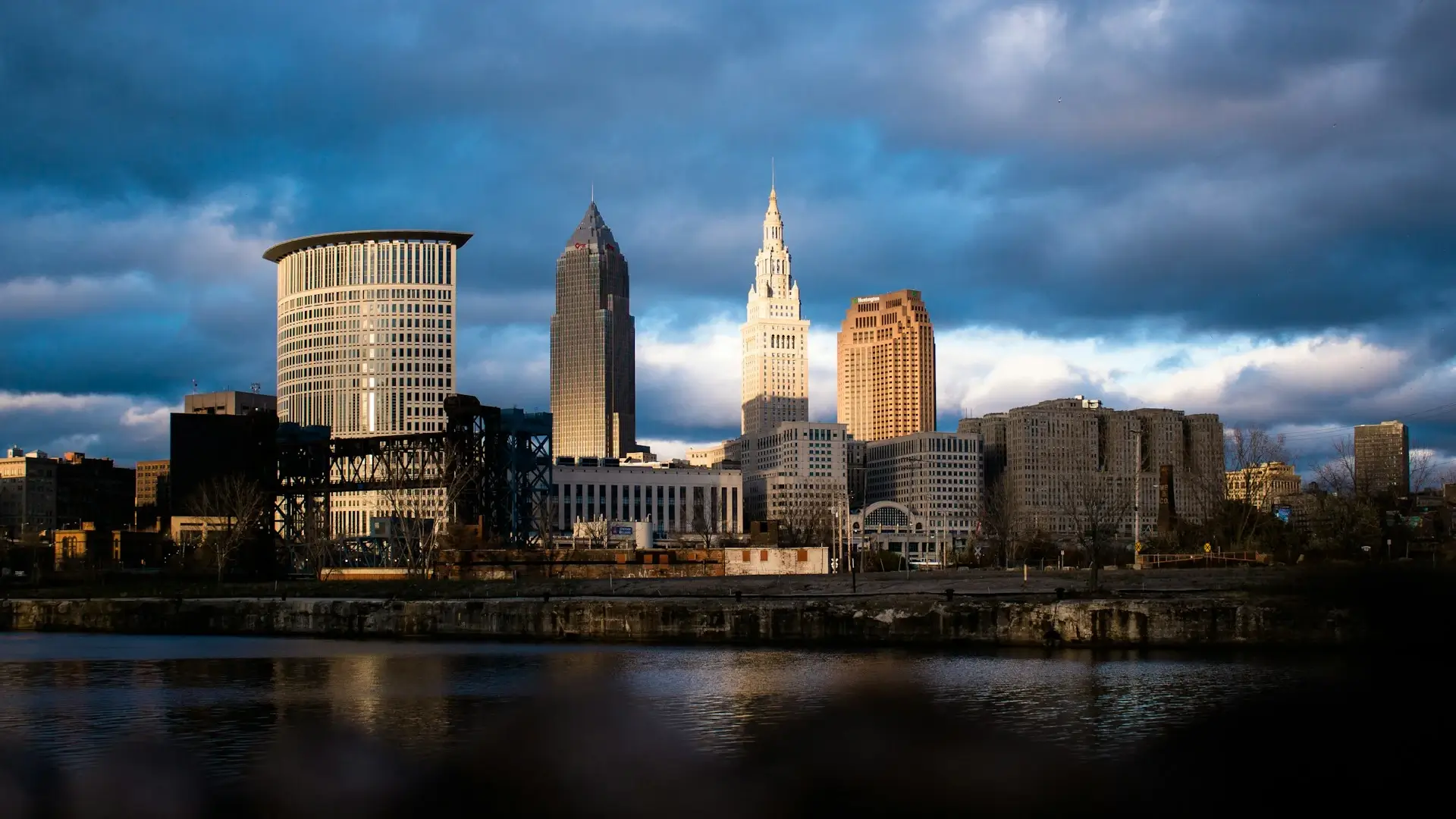
Ohio’s biggest commercial real estate opportunity is also its hardest financing ask. The state holds a large inventory of older office and industrial buildings whose highest and best use is now something else — apartments, logistics, mixed-use — and converting them requires capital at the one moment the property has no income to underwrite. Conventional lenders size loans on trailing cash flow. A conversion has none. That mismatch, not any lack of appetite for Ohio, is why bridge capital is central here.
Searching for the best bridge loan lenders in Ohio mostly returns residential fix-and-flip lenders. This guide covers commercial bridge financing — industrial, retail, multifamily, office conversion and mixed-use, generally $1 million and up.
You are a homeowner buying before you sell. You need residential or consumer bridge financing from a mortgage lender or credit union. Nothing below applies.
You are flipping houses or building spec homes. Ohio has a deep bench for this. Longhorn Investments, The Hard Money Co and iFundCities all serve Ohio investors directly, and national platforms including Lima One Capital (minimum $75,000) and Easy Street Capital are purpose-built for residential investment property. Ohio’s low basis means many deals genuinely belong in this market.
You own or are buying income-producing Ohio commercial property, or converting a building — an office-to-residential project in Cleveland, an industrial building repositioned for logistics, a retail centre mid-lease-up, a delivered Columbus industrial box waiting on tenants — and you need capital until the asset supports permanent debt. This page is for you.
For how the flavours of private capital differ, see our guide to hard money versus private money lenders.
AVANA Capital is a direct commercial real estate lender — not a broker or a marketplace — with $1.7 billion in loans closed over 23+ years and lending coverage in all 50 states. Its bridge program is backed by a joint venture with Oaktree Capital — institutional capital behind the loan.
The Ohio-relevant capability is transitional lending: AVANA sizes to cost and to the plan rather than requiring trailing stabilised income, which is exactly what a conversion cannot supply. Loans run $1 million to $30 million across bridge, construction and permanent debt, with the deepest experience in hospitality and industrial. There is no Ohio footprint, so Toledo, Akron and Youngstown reach the same credit team as Columbus. AVANA-financed projects have supported 5,000+ jobs created in the USA.
Best fit: Ohio conversions and adaptive reuse, industrial lease-up, hospitality, out-of-state sponsors, secondary Ohio markets.
Longhorn Investments is a direct private lender serving Ohio real estate investors, with a Columbus hard-money presence and a product set built around investor acquisition, renovation and refinance.
Best fit: Ohio investor deals, weighted toward residential and smaller commercial. Confirm current loan ranges and commercial appetite directly — published parameters are thinner than the lenders below.
The Hard Money Co lends on Ohio real estate with a stated Cleveland and Indianapolis focus, serving investors on acquisition and renovation projects.
Best fit: Cleveland-area investor deals. Verify loan range, leverage and whether income-producing commercial property is in appetite.
iFundCities is a private lender serving Ohio real estate investors with a Columbus presence, focused on residential investor projects — acquisition, renovation and small-scale development.
Best fit: Columbus-area residential investment deals. Included because it ranks prominently for Ohio hard-money searches; for commercial income-producing property it is not the fit.
Lima One Capital is a national residential-investor lender headquartered in Greenville, South Carolina and lending in 46 states. Products are fix-and-flip, 13-month bridge, DSCR rental and portfolio loans, new construction, and 5+ unit multifamily, with a minimum loan of $75,000. Its Ohio pages position it as an alternative to hard money.
Best fit: Ohio residential investment property and small multifamily — a strong option in that market, and the wrong one for commercial assets.
| Commercial bridge (institutional) | Hard money / private | Conventional permanent | |
|---|---|---|---|
| Rate | Index + spread; below hard money | Roughly 8%–14% | Lowest of the three |
| Points | 1–2 typical | 2–4 common | 0–1 |
| Term | 12–36 months | 6–24 months | 5–25 years |
| Sizing basis | Loan-to-cost on conversions | Loan-to-value, 60%–70% | 65%–75% LTV on stabilized income |
| Speed | Days to weeks | Days | 45–75 days |
| Best fit | Conversions, lease-up, CRE $1M+ | Small balance, residential | Stabilized assets |
On a conversion the important number is loan-to-cost, not loan-to-value — there is no meaningful stabilised value yet. Ask the lender which basis it uses, because the two produce very different proceeds on the same building. Also ask how the interest reserve is sized: a conversion with a twelve-month construction period and a nine-month lease-up needs roughly twenty-one months of carry, not twelve.
AVANA underwrites from its own balance sheet with Oaktree-backed bridge capital, which changes three things for an Ohio borrower.
Transitional assets are the core product rather than the exception. A building with a credible repositioning plan and no current NOI is a structuring conversation about cost, reserve and timeline — which is the difference between Ohio’s conversion pipeline being financeable or not. Second, there is no county footprint across Ohio’s 88 counties. Third, the $1 million floor sits above small-balance private lenders and below institutional minimums, which is where a lot of real Ohio commercial deal flow lives.
Loan sizes run $5 million to $30 million. See our national guide to the best commercial bridge loan lenders and the bridge loan product page.
Columbus. The state’s growth engine — semiconductor and advanced-manufacturing investment plus state-government and university demand. Industrial and flex lease-up is the primary bridge need, and competition for construction capacity is Ohio’s tightest.
Cleveland. The deepest inventory of convertible office and older industrial stock in Ohio, plus healthcare-anchored demand. The most bridge-dependent market in the state.
Cincinnati. A diversified corporate base with strong I-71 and I-75 logistics and an active urban-core reuse pipeline.
Dayton. Aerospace and defence-adjacent demand at a very low basis, with a modest local lender pool and a large stock of repositioning candidates.
Toledo and northwest Ohio. Automotive supply chain, glass manufacturing and Great Lakes logistics — the thinnest lender bench among Ohio’s major markets and the clearest case for a nationwide lender.
On an Ohio conversion the exit has two milestones, not one: the building has to be finished, and then it has to be leased. Underwrite both.
Refinance into permanent debt. Requires completed conversion plus occupancy and NOI sufficient for a conventional DSCR test. Ohio’s low basis helps here — the permanent loan needed is smaller in absolute terms — but the lease-up still has to happen.
Refinance into SBA 504. For owner-occupied commercial property, bridge-to-504 works, since SBA 504 financing offers long fixed-rate amortisation at roughly 10% equity. Slower, so start early.
Sale. Legitimate, and on a completed conversion often the intended outcome — but it ties you to the transaction market at a specific date.
The Ohio failure mode is scope discovery: demolition opens the walls, the budget grows, and the interest reserve was sized to the original number. Build contingency into both the budget and the carry, negotiate extension options, and read our guide to bridge-to-permanent refinancing first.
The best bridge loan lenders in Ohio sort by asset type. Ohio’s private lending bench is genuinely good at what it does. Longhorn Investments, The Hard Money Co and iFundCities serve Ohio investors directly, and Lima One and Easy Street Capital bring national scale to residential investment property. Given Ohio’s low basis, a large share of real deals belong in that market — and for those, these lenders are the right answer rather than a compromise.
What Ohio needs more of is capital that will finance a building on what it will become rather than what it currently earns. The state’s biggest opportunity is its legacy stock — office to residential, industrial repositioned for logistics, downtown adaptive reuse — and none of it underwrites on a trailing rent roll. Those deals need a direct commercial lender that sizes to cost, funds the carry through both construction and lease-up, and has no county line to stop at. That is where AVANA Capital lends: commercial bridge from $5 million to $30 million, backed by a joint venture with Oaktree Capital, across Ohio and all 50 states, on 23+ years and $1.7 billion in closed loans.
Explore more market insights